> For the complete documentation index, see [llms.txt](https://help.aranet.com/llms.txt). Markdown versions of documentation pages are available by appending `.md` to page URLs; this page is available as [Markdown](https://help.aranet.com/aranet-cloud-page/aranet-cloud-landing-page/user-interface-and-core-features/alarms/rules.md).
# Rules
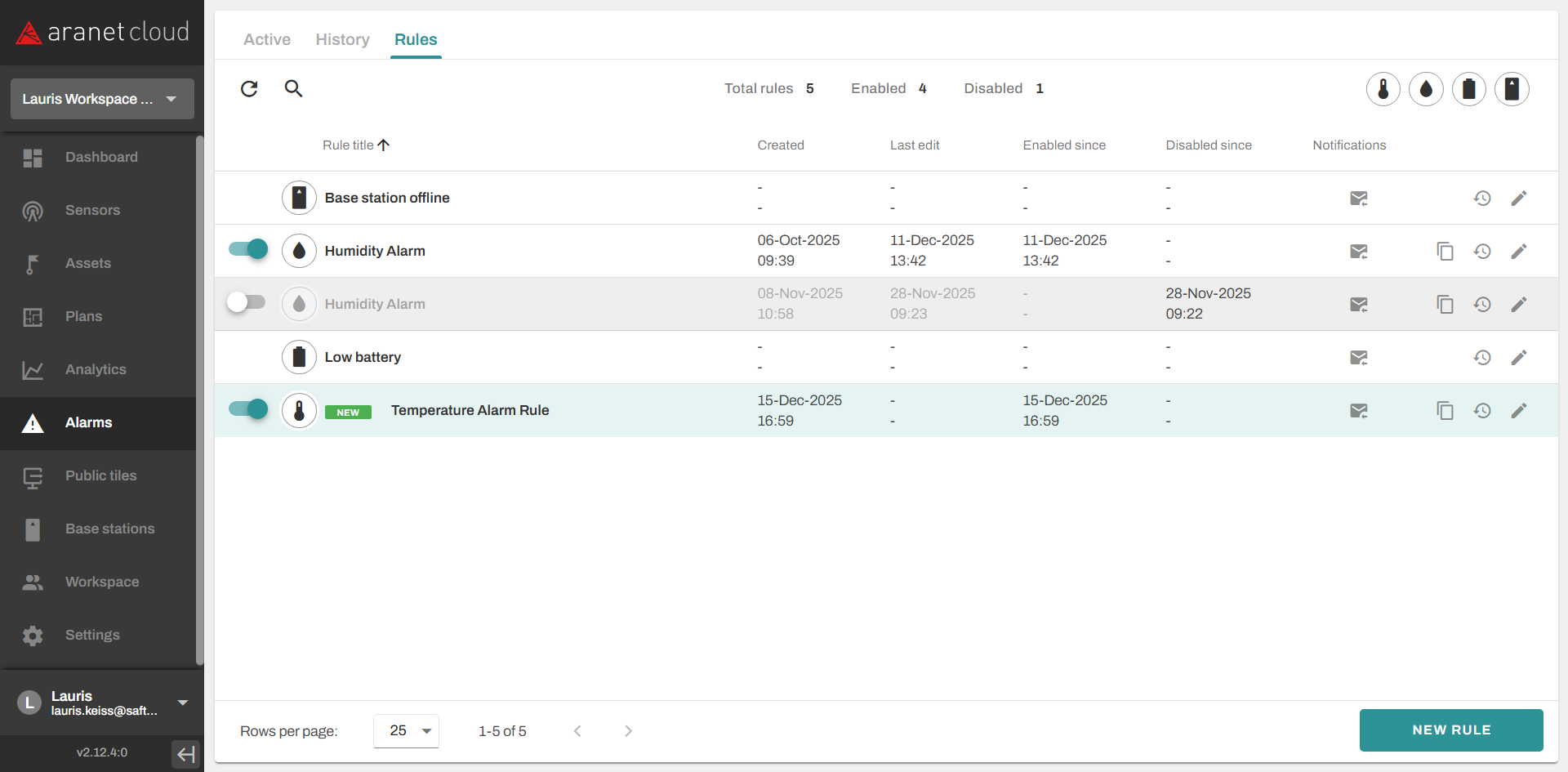
The **Rules** tab allows you to automate actions in Aranet Cloud based on predefined conditions. Rules continuously monitor sensor and system events and automatically trigger selected actions when specific criteria are met, reducing the need for manual supervision.
In this section, you can create and manage rules that respond to events such as alarm state changes, sensor thresholds being exceeded, or other system conditions. Rules help streamline workflows and ensure consistent reactions to important events.
Using the **Rules** tab, you can:
* Create automation rules based on alarms or sensor events
* Define conditions that trigger rule execution
* Configure automatic actions, such as notifications or system responses
* Enable or disable rules as required
* Review and edit existing rules
Rules enhance operational efficiency by enabling proactive, automated responses to critical events, helping maintain reliability and control across your monitored environment.
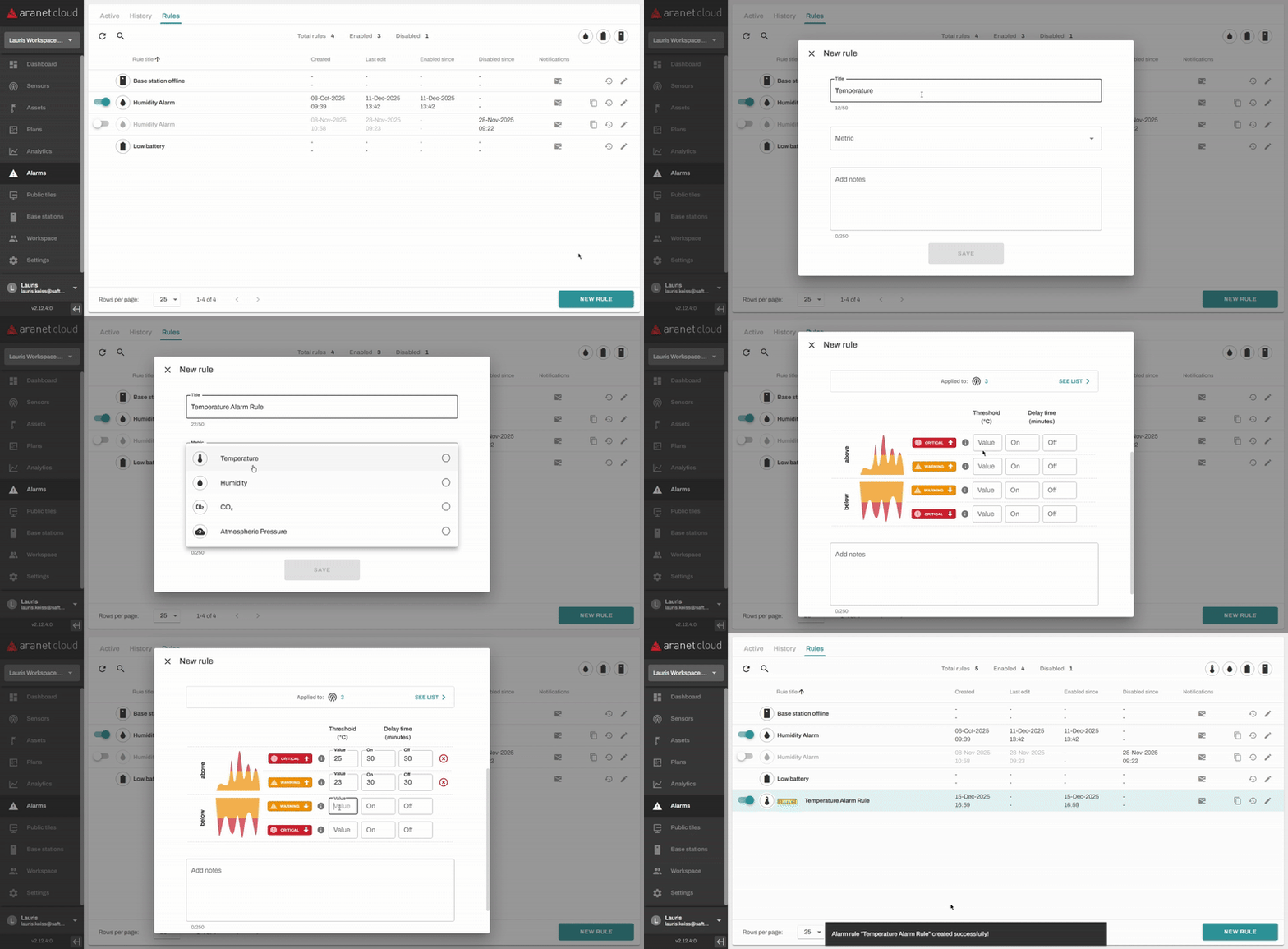
Here is how you can create an Alarm Rule:
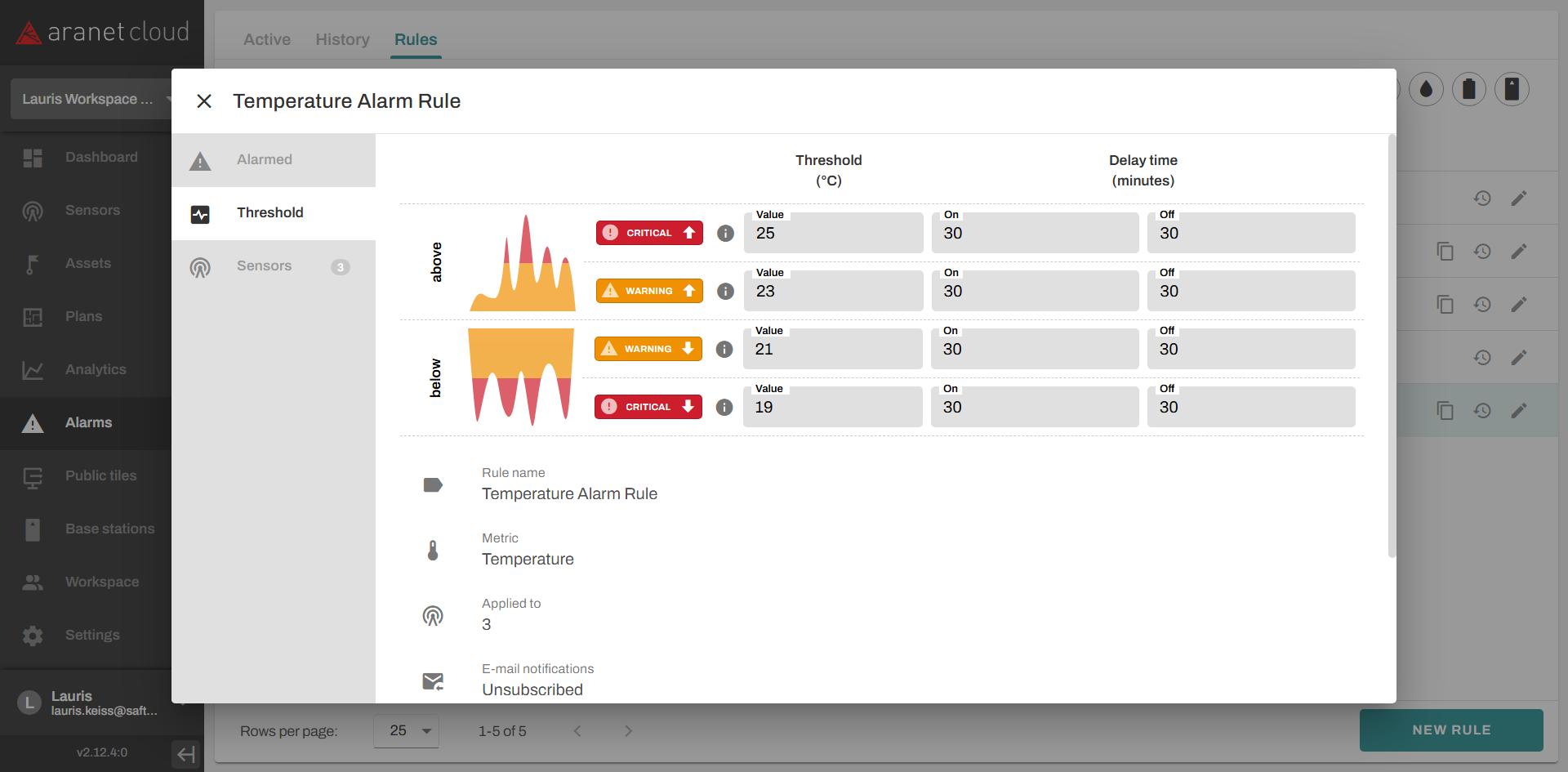
By pressing on the Alarm Rule, you can access information about active alarms, linked sensors and thresholds.
---
# Agent Instructions
This documentation is published with GitBook. GitBook is the documentation platform designed so that both humans and AI agents can read, navigate, and reason over technical content effectively. Learn more at gitbook.com.
## Querying This Documentation
If you need additional information that is not directly available in this page, you can query the documentation dynamically by asking a question.
Perform an HTTP GET request on the current page URL with the `ask` query parameter, and the optional `goal` query parameter:
```
GET https://help.aranet.com/aranet-cloud-page/aranet-cloud-landing-page/user-interface-and-core-features/alarms/rules.md?ask=&goal=
```
`ask` is the immediate question: it should be specific, self-contained, and written in natural language.
`goal` is optional and describes the broader end goal you are ultimately trying to accomplish on behalf of the user. GitBook uses it to tailor the answer towards what is most useful for that goal.
The response will contain a direct answer to the question and relevant excerpts and sources from the documentation.
Use this mechanism when the answer is not explicitly present in the current page, you need clarification or additional context, or you want to retrieve related documentation sections.